
Why Neighbour Disputes Get Stuck - and How to Move Forward


Disputes between neighbours often get stuck because emotional barriers and miscommunication create a deadlock that practical solutions cannot break. Even when both sides want a resolution, deep-seated feelings of being unheard, disrespected, or wronged prevent them from reaching an agreement. Moving forward requires shifting the focus from 'winning' to understanding these underlying emotional roadblocks, often with the help of a neutral process that can restore productive communication.
The Fence That Froze a Friendship
For five years, Mark and Sarah were more than just neighbours; they were friends. Their kids played together, they’d share a bottle of wine over the garden fence on a summer evening, and they had a spare key for each other’s house. Then came the new fence.
Mark wanted to replace the dilapidated old fence that separated their properties. He saw it as a straightforward home improvement project. Sarah, however, felt the proposed new fence was too high, would block light to her prized rose bushes, and was a needless expense. Suddenly, the friends who could agree on everything couldn’t agree on a few feet of wood.
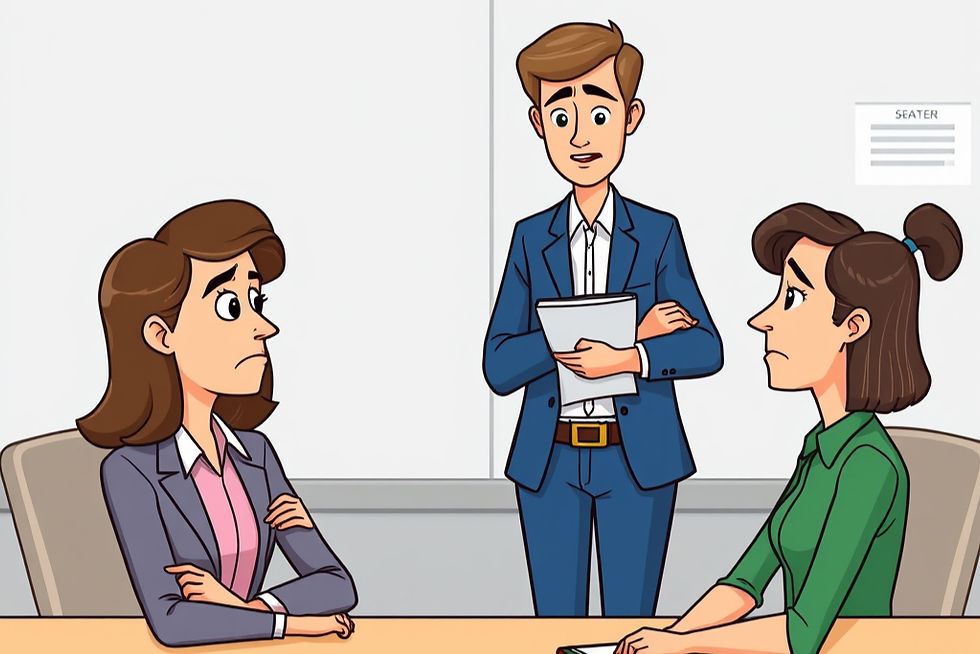
Every conversation became a battle. Mark accused Sarah of being unreasonable; Sarah accused Mark of being a bully. Casual chats over the fence were replaced with tense, circular arguments through clenched teeth. The friendship was stuck, frozen by a conflict that seemed to have no way out.
This experience of being completely stalled is deeply frustrating. You want to find a solution, and you believe the other person does too, yet every attempt to move forward ends in the same stalemate. This guide will explore why this happens with neighbours and what you can do to get a dispute moving again.
Why Do Neighbour Disputes Stall? The Emotional Barriers
The most common reason neighbour disputes get stuck is that they stop being about the practical issue at hand. The conflict over the fence wasn't just about timber and property lines for Mark and Sarah; it had become an emotional battleground.
Emotional barriers are the invisible walls that prevent resolution. They are built from feelings rather than facts. These include:
The Need to Be 'Right': The desire to have your view validated can become more important than finding a workable solution. For Mark, being ‘right’ about his right to build a fence became more important than keeping the peace.
Fear of Losing Face: Admitting you might be wrong, or even just conceding a point to a neighbour, can feel like a personal defeat. This is especially true when other neighbours are watching from behind their curtains.
Feeling Unheard or Disrespected: When you feel the other person isn’t truly listening to your concerns, you dig your heels in. Why should you compromise if they don't even respect your perspective? Sarah felt Mark was dismissing her love for her garden, so she refused to discuss fence styles or costs.
Past Grievances: The current disagreement becomes a lightning rod for every unresolved issue from the past. The fence dispute becomes a symbol of every minor annoyance—the time their bins were left out, the noise from a party three years ago, the leaves that always blow onto your lawn.
In contrast, practical barriers are tangible problems like the cost of materials, legal boundary lines, or planning permission rules. These are often easier to solve. You can agree to split costs, but you can’t easily fix a deep-seated feeling of being ignored. Disputes stall when the emotional barriers are ignored in favour of only discussing the practical ones.
The Role of Miscommunication and Assumptions in Neighbour Disputes
As disputes with neighbours escalate, communication breaks down. We stop having friendly chats and start sending formal-sounding texts or emails. We stop listening to understand and start listening to rebut. This creates fertile ground for assumptions to grow, and assumptions are the fuel for getting stuck.
Sarah assumed Mark’s insistence on the fence was a power play, an attempt to impose his will on her garden. She interpreted his practical approach as a lack of care for their friendship. Mark assumed Sarah’s objections were purely about money and that she was being deliberately difficult. He saw her attachment to her roses as an excuse to avoid a necessary job.
Both were wrong. Their assumptions created a false narrative about the other's intentions. They were no longer arguing with each other; they were arguing with the caricatures they had created in their own minds. This is a classic symptom of a stuck dispute: you stop seeing the neighbour you used to share a cup of sugar with and only see the problem.
What 'Moving Forward' Actually Looks Like
When you are deeply entrenched in a conflict, your idea of "moving forward" can become warped into the idea of "winning." You imagine a future where your neighbour finally admits you were right all along and apologises profusely.
This is a fantasy. True forward movement in a dispute rarely involves a victory parade. Instead, it looks like this:
Acknowledgement: Both parties acknowledge the validity of the other's feelings and perspective, even if they don't agree. Mark could acknowledge Sarah’s sadness about her roses, while Sarah could acknowledge Mark’s desire for privacy and security.
Shifting from Blame to Contribution: The focus moves from "This is your fault" to "What has been my contribution to this stalemate, and what can I do to help us move past it?"
Focusing on Future Interests: The conversation pivots from what happened in the past to what both parties need for the future. What did Sarah need to feel her garden was protected? What did Mark need to feel his property was secure?
Finding a 'Good Enough' Solution: Moving forward often means letting go of the perfect outcome in favour of one that both parties can live with. It’s not about total victory, but mutual, acceptable compromise.
Options for Breaking the Deadlock
If you recognise your dispute is stuck, you need to change the dynamic. Continuing to have the same conversation over the fence will only yield the same frustrating result.
Take a Deliberate Pause: Agree to put the topic aside for a set period - a week, a month. This is not avoidance; it's a strategic cooling-off period. It allows emotions to settle and creates space for new perspectives to emerge.
Change the Messenger: Is there another neighbour you both trust? Sometimes, having them talk to each of you separately can help filter out the emotional noise and identify the real issues. However, be cautious not to drag others into the conflict.
Write It Down: A well-worded, polite letter can be less confrontational than a face-to-face discussion. Write down what a successful resolution would look like to you. What are your core needs? What are you willing to compromise on? This can clarify your own thinking and present your case calmly.
How a Neutral Process Can Restart Progress
When a dispute is truly stuck, like Mark and Sarah's, self-help can only get you so far. The trust is too broken, and the assumptions are too ingrained. This is the point where a structured, neutral process can make all the difference.
Bringing in a neutral third party, like a professional mediator, fundamentally changes the rules of the game. A mediator isn't friends with either of you. Their only goal is to help you find a way forward that works for both of you, so you can go back to living side-by-side peacefully.
They do this by:
Creating a Safe Environment: A mediator establishes ground rules for communication, ensuring that everyone gets to speak without interruption and that the conversation remains respectful.
Facilitating Understanding: They help each party articulate their underlying interests—the 'why' behind their position. They act as a translator, helping Mark hear Sarah's fear of losing her sanctuary and helping Sarah hear Mark’s need to feel secure in his home.
Exploring Options Creatively: A mediator can brainstorm solutions that you might be too close to the problem to see. Perhaps a different type of fence? A trellis section to allow light through? An agreement to plant a new shrub elsewhere? They can reality-test ideas and help you build a durable, practical agreement.
For Mark and Sarah, mediation allowed them to finally have the conversation they couldn't have on their own. The mediator helped them see that their goals weren't mutually exclusive. They developed a hybrid solution: a slightly lower fence with a trellis panel over the rose bushes, with Mark agreeing to help with the cost of moving them.
The process didn't magically make them best friends overnight, but it got them unstuck. It helped them move from being adversaries back to being neighbours, solving a problem together. When a dispute gets stuck, it's rarely because there is no solution. It's because the path to the solution is blocked by emotional debris. A neutral process is the bulldozer that can clear that path. Need help with your situation? Speak to the Mediation Agency team today.


Comments