
A Guide to Managing Workplace Conflict for HR


It started, as it often does, with a simple email. Sarah, an HR professional just six months into her role, read the message from Mark in Marketing. It was a formal complaint about his teammate, Chloe. The subject line was stark: "URGENT: Formal Grievance - Chloe's Behaviour." Sarah’s stomach tightened. She’d handled recruitment, onboarding, and payroll, but a direct conflict between two high-performing team members was new territory.
Mark’s email detailed a series of perceived slights: Chloe taking credit for his ideas, speaking over him in meetings, and creating what he called a "toxic and uncooperative atmosphere." He wanted HR to "do something." Sarah knew she had to act, but the path forward felt shrouded in fog. What was the right first step? How could she help without making things worse?
If you’re an HR professional, Sarah’s situation might sound familiar. Managing interpersonal friction is one of the most challenging aspects of the job. It requires a delicate balance of empathy, impartiality, and strategic thinking. This guide is here to walk you through it, using a story-telling approach to explain key concepts and provide practical, actionable tips for navigating the tricky waters of workplace conflict.
Understanding the Landscape: Defining Key Terms
Before diving into solutions, it's crucial to understand the language of conflict management. These terms are more than just jargon; they represent distinct processes and outcomes.
A workplace dispute is any disagreement or conflict that arises between employees, or between an employee and management, within a professional environment. It can range from a minor misunderstanding over project responsibilities to a serious allegation of bullying or harassment. Mark and Chloe’s situation is a classic workplace dispute.
Conflict resolution is the broad umbrella term for the methods and processes involved in facilitating a peaceful end to a dispute. The goal is to find a solution that all parties can agree upon. This can involve simple conversations, formal grievance procedures, or more structured interventions.
Mediation is a specific, voluntary form of conflict resolution. It involves a neutral third party, the mediator, who helps the disputing parties communicate their issues and explore potential solutions together. The mediator doesn't take sides or impose a decision. Instead, they facilitate a structured conversation, empowering the individuals involved to find their own mutually acceptable agreement. It’s a powerful tool for preserving relationships, which is often impossible in more adversarial processes.
From Complaint to Conversation: The HR Professional's Role in Managing Workplace Conflict
Back in Sarah’s office, her first instinct was to call Mark and Chloe into a meeting together to "sort it out." She paused. Would that be productive? Mark was clearly angry, and ambushing Chloe might only escalate the tension. Instead, she decided to approach the situation methodically.
Step 1: Acknowledge and Assess
Sarah’s first move was to respond to Mark. She acknowledged receipt of his email, assured him the matter was being taken seriously, and scheduled a private, confidential chat with him for the next day. This validated his feelings and bought her time to think.
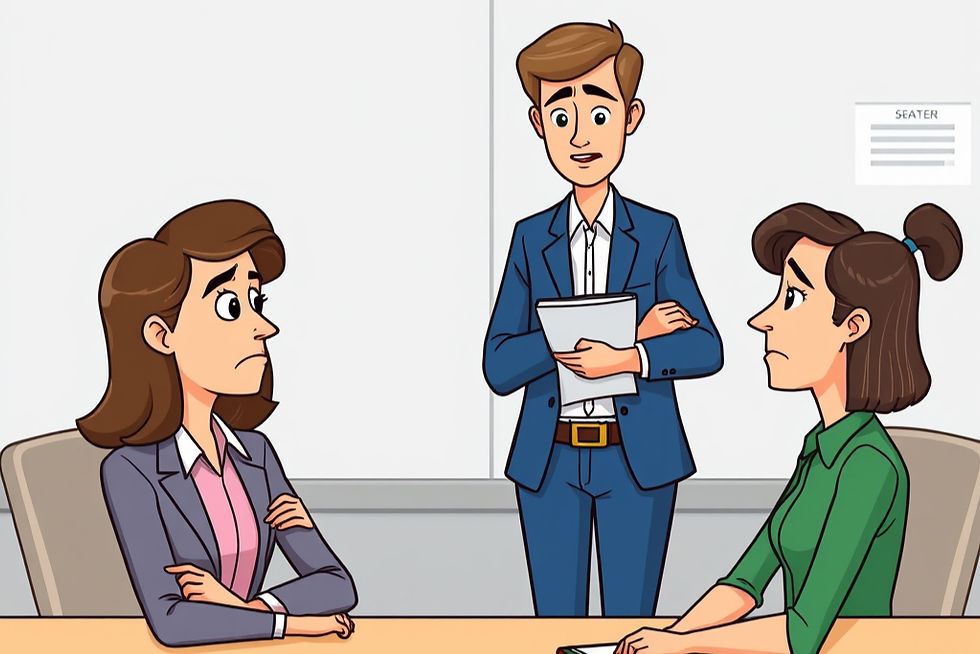
During her meeting with Mark, Sarah's goal wasn't to judge, but to listen. She let him explain the situation in his own words, using active listening to show she understood his perspective. She then did the same with Chloe, who was surprised and upset by the complaint. Chloe explained that she saw her actions as proactive and collaborative, not aggressive. She felt Mark was being overly sensitive.
It was clear to Sarah that this was a classic case of miscommunication and differing work styles, which had festered into genuine animosity. It wasn't a case for disciplinary action, but it needed intervention before it poisoned the entire team. This was a prime candidate for mediation.
Step 2: Proposing Mediation
Approaching employees about mediation requires care. You are not forcing them into a room; you are offering them a constructive opportunity.
Sarah scheduled separate follow-up meetings. To Mark, she said, "Thank you for sharing your concerns. It’s clear this situation is causing you significant stress. I believe the most productive way forward is to have a structured conversation with Chloe, facilitated by a neutral party, to help you both express your viewpoints and find a better way of working together. This process is called mediation. Would you be open to exploring that?"
To Chloe, she framed it similarly: "It seems there's been a significant breakdown in communication between you and Mark. To help you both repair your working relationship, I'd like to suggest mediation. It's a supportive process where you can both share your perspectives and work towards a positive outcome. How would you feel about that?"
By framing mediation as a supportive tool for both of them, rather than a punishment for one, Sarah secured their agreement to proceed.
Top Tips for HR Professionals Managing Conflict
Navigating disputes like Mark and Chloe's is a learned skill. Here are some top tips to guide you.
1. Listen Without Taking Sides
Your primary role is to be an impartial facilitator. Avoid the temptation to decide who is "right" and who is "wrong." Each person has their own truth and their own perception of events. Your job is to understand both perspectives fully before suggesting a path forward.
2. Identify When Mediation is Needed
Not every tiff requires formal mediation. A quick, informal chat can resolve minor misunderstandings. However, mediation is highly effective when:
Communication has completely broken down.
The conflict is impacting team morale or productivity.
The individuals are willing to find a solution but don't know how.
A formal grievance has been raised, but the relationship is salvageable.
Emotions are running high and a structured environment is necessary.
3. Create a Safe and Supportive Environment
Conflict makes people feel vulnerable. Ensure all conversations are held in a private, confidential space. Reassure employees that the goal is resolution, not blame. Use neutral language and maintain a calm, professional demeanour. This builds the psychological safety needed for honest dialogue.
4. Know When to Bring in an Expert
As an HR professional, you can facilitate informal mediations. However, for complex, highly emotional, or legally sensitive disputes, using an external, accredited mediator is often the best choice. External mediators are seen as truly neutral, and their specialised expertise can unlock solutions you might not see. They bring a level of authority and structure that signals the seriousness and importance of finding a resolution.
5. Focus on Future Actions, Not Past Wrongs
While it's important to let each person tell their story, the focus of conflict resolution should be on the future. The key question is not "Who did what?" but "How can we work together effectively from this day forward?" Guide the conversation towards concrete, actionable steps. For Mark and Chloe, this might involve agreeing on a system for sharing ideas in meetings or setting clear boundaries around project ownership.
The Resolution: A New Way of Working
Sarah arranged for an external mediator to meet with Mark and Chloe. In the facilitated session, they were each given uninterrupted time to speak. For the first time, Chloe truly heard how her direct style was perceived by Mark as dismissive. And Mark understood that Chloe’s intention was to drive the project forward, not to undermine him.
The mediator helped them create a simple "charter" for their working relationship. It included practical agreements: they would use a shared document to log ideas before meetings, they would take turns leading presentations, and they would have a brief weekly check-in to ensure alignment.
The change wasn't instant, but it was significant. The tension eased. The rest of the team noticed the shift. A few months later, Sarah saw Mark and Chloe laughing by the coffee machine. The formal grievance was a distant memory. By handling the conflict with a structured, empathetic, and resolution-focused approach, Sarah had not only solved a problem, she had helped rebuild a professional relationship and strengthened her team.
Managing workplace conflict will always be a challenge, but it is also an opportunity. It's a chance to build a more resilient, communicative, and supportive culture, one conversation at a time. Need help with your conflict or dispute? Speak to the Mediation Agency team today.


Comments