
De-escalating Workplace Conflicts for HR: A Guide to Restoring Calm


The shouting started just after 2:00 PM on a Tuesday. James, a Junior HR Advisor who had only recently traded his recruitment role for a generalist position, froze at his desk. The noise wasn't coming from the street; it was coming from the open-plan marketing quadrant.
He walked - didn't run - towards the commotion. There stood Ben, a usually quiet graphic designer, and Rachel, a project manager known for her high standards. They were standing toe-to-toe, voices raised, faces flushed. A stack of proofs lay scattered on the floor between them. The rest of the office had fallen into a stunned, awkward silence.
"I cannot work like this!" Ben yelled."Then maybe you shouldn't be working here!" Rachel retorted.
James felt his own adrenaline spike. This wasn't a textbook case study; this was raw, messy human emotion spilling over into a professional space. He knew he had to act, but the 'how' felt terrifyingly unclear.
If you are new to HR, you might share James’s apprehension about de-escalating Workplace Conflicts.
Conflict is uncomfortable. It feels personal. But for an HR professional, the ability to walk into the heat of a dispute and lower the temperature is a superpower. This guide uses James’s story to explore the critical skills of de-escalation, documentation, and resolution strategies, providing you with a roadmap for when the shouting starts.
Understanding the Spark: Defining Key Terms
Before we look at how James handled the situation, we need to understand the mechanics of what was happening. Conflict rarely goes from zero to one hundred instantly; it follows a path.
Conflict Escalation is the process by which a disagreement increases in severity and intensity. It often starts with a minor difference of opinion or a misunderstanding. If left unchecked, it gathers momentum—emotions take over, listening stops, and the focus shifts from solving a problem to winning an argument or hurting the other person. Ben and Rachel didn't start shouting about a deadline; they had likely been enduring weeks of simmering tension that finally boiled over.
Resolution Strategies are the various approaches used to settle disputes. These can range from informal coaching and mediation to binding arbitration. The goal is always to move the parties away from their entrenched positions (what they want) to their underlying interests (why they want it).
Grievance Procedure is the formal mechanism an organisation uses to handle complaints. It provides a structured framework for employees to raise concerns about their workplace environment, treatment, or terms of employment. While James hoped to resolve this informally, he knew the grievance procedure was the safety net if de-escalation failed.
Stepping In: The Art of De-escalating Workplace Conflicts
Back in the marketing quadrant, James knew he couldn't resolve the issue right there in front of the audience. His immediate goal wasn't a solution; it was safety and containment.
The Intervention
James approached them calmly. He didn't shout to be heard over them; he pitched his voice low and firm. "Ben, Rachel. Let’s pause."
He didn't tell them to "calm down"—a phrase that historically has never calmed anyone down. Instead, he acknowledged the intensity. "I can see you’re both incredibly frustrated. But we can’t discuss this here. Rachel, could you please join me in Meeting Room A? Ben, I’m going to ask you to take five minutes in the breakout area, and then I’ll come and get you."
Actionable Insight: Separation is often the first step in de-escalation. When the 'fight or flight' brain is active, rational conversation is impossible. By separating them, James broke the feedback loop of anger.
The Cool Down
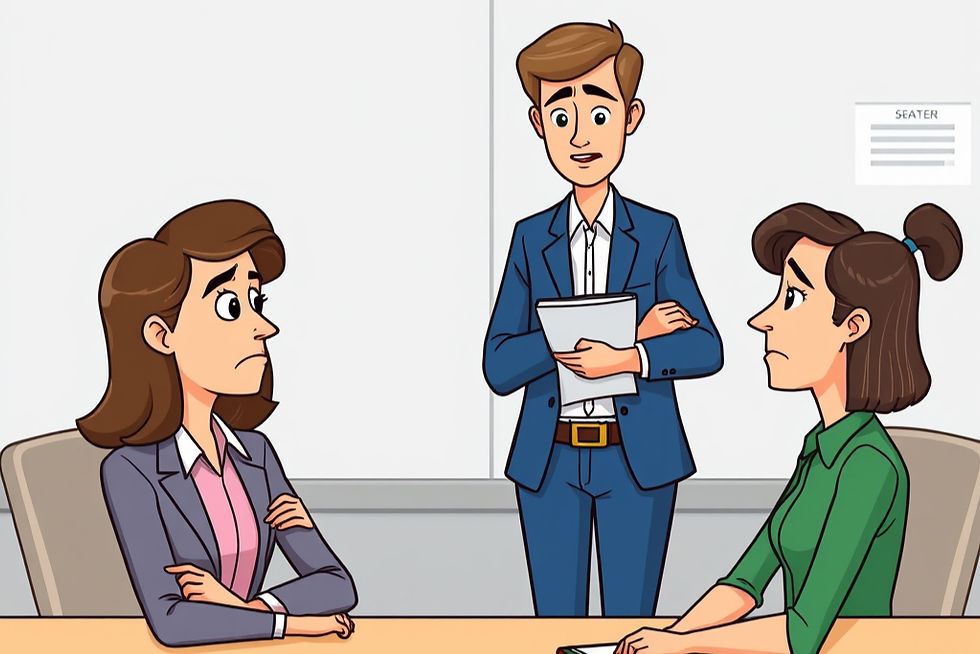
In the meeting room, Rachel was pacing, still fuming. James didn't ask her for facts yet. He asked for feelings. "You seem really upset, Rachel. What’s going on?"
By allowing her to vent without interruption, he let the balloon deflate. He used active listening—nodding, maintaining eye contact, and summarising what she said ("So, you feel like your deadlines aren't being respected?"). He did the same with Ben shortly after.
This is the core of de-escalation: validating emotions without validating bad behaviour. You can accept that someone is angry without agreeing that shouting is acceptable.
From Chaos to Clarity: Documentation
Once the immediate fire was doused and Ben and Rachel were sent home early to cool off, James returned to his desk. He was exhausted, but he knew his job wasn't done. He had to document the incident.
Documenting disputes effectively is one of the most vital, yet often neglected, parts of HR. If it isn't written down, in the eyes of employment law, it often didn't happen.
James opened a new file. He didn't write: "Ben and Rachel had a massive fight."Instead, he wrote: “At approx. 14:15, a verbal altercation occurred between Ben X and Rachel Y in the marketing department. Voices were raised; work materials were thrown on the floor. Both parties were separated immediately. Witnesses included [Name] and [Name].”
Top Tips for Documentation:
Be Objective: Stick to the facts. Record what was seen and heard, not your opinion on who was right.
Be Timely: Write it down while the memory is fresh.
Be Specific: Use direct quotes if you recall them. Note times and locations.
Keep it Confidential: Store these notes securely.
This documentation serves two purposes. First, if one party decides to raise a formal grievance later, James has a contemporaneous record of the event. Second, it helps identify patterns. If Ben blows up again in six months, James can look back and see this wasn't an isolated incident.
Moving Forward: Resolution Strategies
The next day, the office was quiet. James held a mediated conversation with Ben and Rachel. They weren't friends, and they might never be, but they needed to be colleagues.
James used a collaborative resolution strategy. He guided them to identify the root cause. It turned out Rachel was under pressure from senior management for quicker turnarounds, and she was passing that stress onto Ben without explaining why. Ben, feeling micromanaged and disrespected, had finally snapped.
Once the 'why' was on the table, the 'how' became easier. They agreed on a new workflow: Rachel would provide context for urgent deadlines, and Ben would communicate delays early rather than waiting until the last minute.
Prevention: Fostering a Culture of Open Communication
The incident with Ben and Rachel made James realise something important: the explosion could have been prevented. The tension had been building for weeks, but neither employee felt they had an outlet to express it safely.
HR isn't just about putting out fires; it's about fireproofing the building. This means fostering a culture of open communication.
How to Build It:
Regular Check-ins: Encourage managers to have 1:1s that aren't just about tasks, but about wellbeing and working relationships.
Training Managers: Managers are the first line of defence. They need training to spot the early signs of conflict—the passive-aggressive emails, the withdrawal from meetings, the drop in productivity—before it becomes a shouting match.
Psychological Safety: Create an environment where employees can say "I'm struggling" or "I disagree" without fear of retribution.
James decided to implement a monthly "pulse check" in team meetings, allowing staff to raise process frustrations before they became personal grievances.
Top Tips for HR Professionals
If you find yourself in James’s shoes, remember these key takeaways:
Safety First: If a conflict ever threatens physical safety, remove yourself and others, and call security or the police. No HR policy is worth an injury.
Remain Neutral: You are not a judge; you are a facilitator. Your role is to protect the process, not to pick a side.
Control Your Own Emotions: Conflict is contagious. If you panic or get angry, the situation will escalate. Be the anchor in the storm.
Know the Handbook: Be intimately familiar with your company’s grievance and disciplinary policies. You don't want to be looking up the rules while the game is being played.
Follow Up: Resolution doesn't happen in a single meeting. Check in with the parties a week later, then a month later. Ensure the agreement is holding.
Conclusion
Six months later, the marketing quadrant was peaceful. Ben and Rachel were still working together. They weren't going for lunch together, but the shouting had stopped, and the work was getting done.
James had learned a valuable lesson. Conflict is inevitable in any workplace where passionate people work together. It’s not a sign of failure; it’s a sign of life. The failure lies in ignoring it or mishandling it.
By understanding the mechanics of escalation, mastering the art of the calm intervention, and rigorously documenting the process, you move from being a passive observer of workplace drama to an active architect of workplace peace. If you need help managing your workplace conflict situation, please reach out to the Mediation Agency team for help and support.


Comments