
Do You Have to Go to Court to Resolve a Dispute?


The envelope arrived on a Saturday morning. It was thick, heavy, and stamped with the logo of a local law firm. For Tom, a small business owner who had been arguing with a contractor over an unfinished renovation for months, the sight of it made his heart hammer against his ribs.
He didn't even need to open it to know what it represented: Court. Judges. Wigs. Arguments. And money—lots of it.
Tom sat at his kitchen table, staring at the unopened letter. He felt trapped. He believed he was right—the contractor had left the job half-done and walked away with the deposit—but the thought of standing in a courtroom filled him with dread. He imagined months of stress, sleepless nights, and legal bills that might cost more than the renovation itself.
"Is this really the only way?" he wondered aloud.
If you are currently embroiled in a dispute—whether it's a business conflict, a disagreement with a neighbour, or a family issue—you likely share Tom’s fear. We are conditioned by television dramas and news headlines to believe that the only way to get justice is to stand before a judge and have them bang a gavel.
But the reality is very different. Court is not the only option. In fact, for most disputes, it is often the worst option. This guide will walk you through the alternatives, helping you understand when court is truly necessary, why you should avoid it if possible, and how methods like mediation can offer a faster, cheaper, and less stressful path to resolution.
The Common Fear: Court as the Default to Resolve a Dispute
Why do we instinctively reach for the threat of "I'll see you in court" when conflict arises? It’s because the legal system is seen as the ultimate authority. We believe that if we can just get a judge to hear our side, they will validate us, punish the other side, and make everything right.
However, this belief ignores the messy reality of litigation. The legal system is designed to apply the law, not necessarily to provide emotional closure or practical solutions that suit everyone.
Tom’s fear was rooted in the unknown. He didn't know the rules of the game he was about to play. He feared losing control. In a courtroom, you hand over your power to strangers—lawyers who argue for you and a judge who decides for you. You become a passenger in your own dispute.
Acknowledging this fear is the first step. It is perfectly normal to want to avoid court. And the good news is, the legal system actually wants you to avoid it too. Courts are overstretched and underfunded; they actively encourage people to settle their differences elsewhere.
When Is Court Actually Required?
Before we look at the alternatives, it is important to clarify when court might be unavoidable. While rare, there are specific situations where a judge’s ruling is necessary.
Criminal Matters: If a crime has been committed, the state must prosecute. You cannot mediate a robbery or an assault.
Setting a Legal Precedent: sometimes, a company or an individual wants a ruling to clarify a murky point of law for future cases.
Emergency Injunctions: If you need to legally stop someone from doing something immediately (like knocking down a shared wall or selling a disputed asset), you need a court order.
Unwillingness to Engage: If the other party completely refuses to talk, negotiate, or acknowledge the dispute, issuing a court claim might be the only way to force them to the table.
However, for the vast majority of disputes—unpaid invoices, breach of contract, boundary issues, inheritance disagreements—court is not a requirement. It is a choice. And often, it is a choice of last resort.
The Hidden Costs of Court
Most people focus on the financial cost of going to court. Solicitors’ fees can spiral into the tens of thousands very quickly. But the price tag is just the tip of the iceberg. The hidden costs are often far more damaging.
1. The Cost of Time
The legal process is notoriously slow. It is not uncommon for a civil case to take 12 to 18 months to reach a final hearing. That is over a year of your life lived under a cloud. For a business, that is a year of distraction from growth. For an individual, it is a year of checking emails with a knot in your stomach.
2. The Cost of Stress
Litigation is adversarial by design. It pits two sides against each other in a battle to win. This requires aggressive tactics. You will likely have to read letters detailing why you are incompetent, untruthful, or unreasonable. This constant conflict takes a heavy toll on mental health. Tom found himself snapping at his children and losing sleep, the stress of the dispute bleeding into every corner of his life.
3. The Cost of Relationships
Court destroys relationships. It creates a winner and a loser. Once you have dragged a neighbour, a business partner, or a family member through a cross-examination, there is rarely a way back. If you need to maintain any kind of relationship with the other party after the dispute is resolved, court is the most destructive path you can take.
4. The Cost of Certainty
In court, you lose control of the outcome. You might think you have a "slam dunk" case, but judges are human, and the law is complex. You could walk away with nothing, or worse, be ordered to pay the other side's legal fees. It is a high-stakes gamble.
Non-Court Options: Alternatives in Plain English
So, if you put the court claim form in the shredder, what do you do instead? There is a whole spectrum of options known collectively as Alternative Dispute Resolution (ADR).
Negotiation
This is the simplest form. It’s just you and the other party talking. It can be done over a coffee or via email. It’s free, fast, and you keep total control. The downside? If communication has already broken down (like in Tom’s case), it’s hard to get started without it turning into another argument.
Arbitration
Arbitration is like "court-lite." You hire a private judge (the arbitrator) to make a decision for you. It’s faster and more private than court, and the decision is usually binding. However, it can still be expensive, and like court, it is adversarial—someone still loses.
Mediation
Mediation is the "goldilocks" option for many. It involves a neutral third party (the mediator) who facilitates a discussion between the disputing parties. The mediator doesn't decide who is right or wrong. Instead, they help you find a solution you can both agree on. It is confidential, voluntary, and focuses on the future, not just the past.
Why Early Resolution Leads to Better Outcomes
The longer a dispute drags on, the harder it becomes to solve. Positions harden. "I want my money back" becomes "I want my money back, plus interest, plus an apology, and I want to ruin your reputation."
Choosing an alternative path early stops this escalation. It signals that you are pragmatic and reasonable.
Let’s go back to Tom. Instead of calling a lawyer, he contacted a mediation service. They wrote to the contractor, not with a threat, but with an invitation: “Tom would like to resolve this matter quickly and amicably so you can both move on. Would you be open to a mediated conversation?”
The contractor, who was also dreading the prospect of legal fees and bad reviews, agreed.
Introducing Mediation: A Practical Alternative
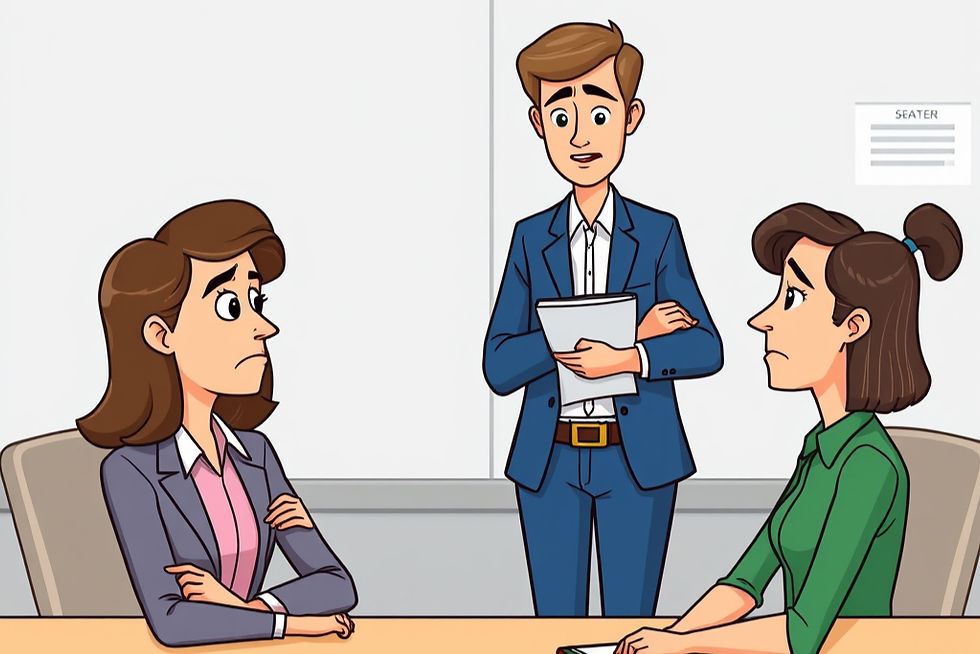
Mediation works because it changes the dynamic. In a courtroom, Tom and the contractor would have been on opposite sides of the room, speaking through expensive interpreters (lawyers). In mediation, they sat in the same room (virtually, in this case).
The mediator set the ground rules: no interrupting, no shouting. She asked Tom to explain how the unfinished work was affecting his business. She asked the contractor to explain why he had walked off the job.
It turned out the contractor was having severe cash flow problems due to another client not paying him. He felt embarrassed and had panicked, avoiding Tom’s calls because he couldn't afford the materials to finish the job.
Once the truth was on the table—stripped of legal posturing—the solution became clear. Court would have bankrupted the contractor, leaving Tom with nothing. Instead, through mediation, they agreed on a payment plan where Tom purchased the materials directly, and the contractor finished the labour on weekends to pay off the debt.
Why Mediation Worked for Tom (and Could Work for You):
It was Fast: The whole process took three weeks, not eighteen months.
It was Cheaper: The cost was a fraction of a solicitor’s retainer fee.
It was Creative: A judge could only have ordered a monetary payment (which the contractor didn't have). Mediation allowed them to trade labour for debt—a creative solution that suited both.
It Preserved Dignity: The contractor wasn't publicly shamed. Tom got his renovation finished.
Conclusion: You Have a Choice
The answer to the question "Do you have to go to court?" is almost always "No."
The letter on the doormat doesn't have to be the start of a war. It can be the trigger to find a better way. By understanding the hidden costs of litigation and exploring alternatives like mediation, you take back control. You move from being a victim of the legal system to an architect of your own resolution.
If you are staring at a dispute that feels overwhelming, put down the claim form. Take a breath. Consider an alternative that saves your money, your sanity, and perhaps even the relationship. Justice doesn't always need a gavel; sometimes, it just needs a conversation. If you need help with your situation, reach out to the Mediation Agency team today.


Comments