
Employee Grievance Mediation: Step-by-Step Process Explained

A practical mini-guide for employers, HR teams, and co-workers

Employee grievances are a fact of working life. When handled well, they can lead to better communication, repaired relationships, and a healthier workplace. When handled badly, they can escalate into formal complaints, long absences, or legal risk.
This guide explains how employee grievance mediation works in practice, what each party can expect, and how to approach the process constructively.
What is employee grievance mediation?
Employee grievance mediation is a voluntary, confidential process where an independent mediator helps people involved in a workplace grievance have a structured conversation and explore workable solutions.
It is not an investigation, a disciplinary process, or a judgement about who is right or wrong. The focus is on resolving the issue and improving working relationships.
Step-by-step: how grievance mediation works
1. Identifying suitability
Before mediation begins, HR or management considers whether the issue is appropriate. Mediation is usually suitable where:
There is an ongoing working relationship
The grievance involves communication breakdown, behaviour, or team dynamics
Both parties are willing to engage
Mediation is usually not suitable where there are safeguarding concerns, serious misconduct requiring formal investigation, or where one party refuses to participate.
2. Referral to an independent mediator
Once agreed, the case is referred to an independent workplace mediator, often through an organisation such as The Mediation Agency.
At this stage:
The mediator confirms neutrality and confidentiality
Practical arrangements (online or in-person) are agreed
Parties are reassured that participation is voluntary
3. Individual pre-mediation meetings
The mediator usually speaks to each person separately first.
These confidential conversations allow individuals to:
Explain their perspective in full
Identify what matters most to them
Clarify what they would like to change going forward
Ask questions about the process
For HR, this stage reduces anxiety and increases the likelihood of a productive joint session.
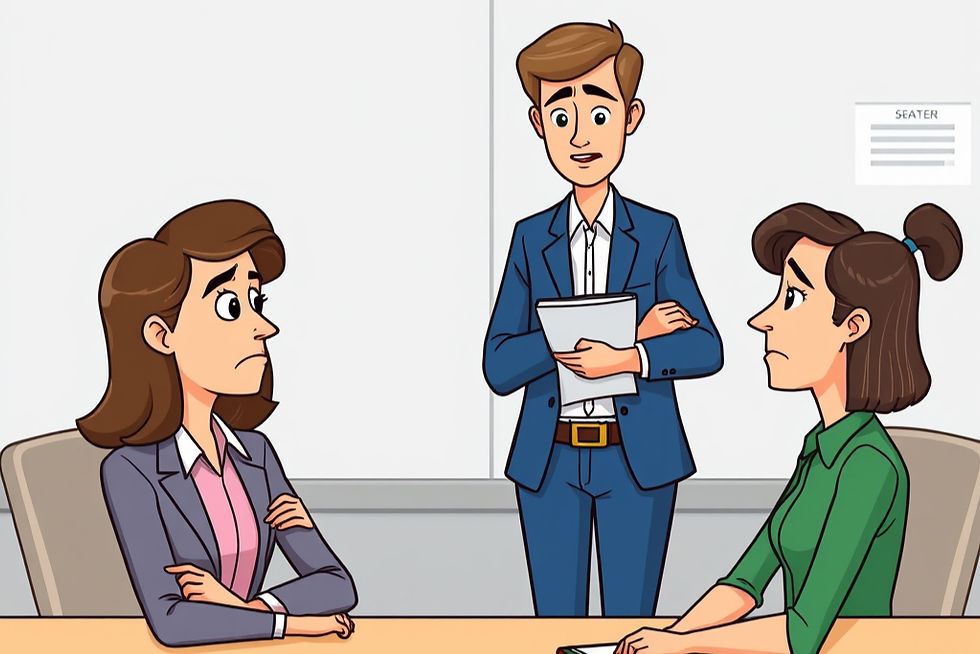
4. The joint mediation meeting
This is the core of the process.
With the mediator’s guidance:
Each person has uninterrupted time to speak
Issues are clarified and reframed where needed
Misunderstandings are explored
Common ground and future needs are identified
The mediator manages the conversation, keeps it respectful, and helps parties move from past events to future solutions.
5. Exploring options and agreements
The mediator supports the parties to explore practical options, which might include:
Changes to communication or working practices
Clarifying roles, boundaries, or expectations
Agreed check-ins or review points
Support mechanisms going forward
Any agreement is owned by the parties, not imposed by HR or the mediator.
6. Outcome and follow-up
Agreements may be written down (by agreement) and shared with HR where appropriate.
HR may then:
Monitor progress at an agreed interval
Offer additional support if needed
Close the grievance process where resolution has been achieved
Guidance for employers and HR teams
Do:
Introduce mediation early, before positions harden
Explain clearly that mediation is voluntary and confidential
Use independent mediators to build trust
Position mediation as supportive, not disciplinary
Avoid:
Treating mediation as a “last resort”
Pressuring employees to settle
Expecting the mediator to make findings or decisions
Well-used mediation often reduces formal grievance escalation, absence, and turnover.
Guidance for co-workers and employees
If you are asked to take part in mediation:
You are not being judged or investigated
You do not have to “prove” your case
You control whether an agreement is reached
The aim is to improve how things work going forward
Coming with an open mind — even if you strongly disagree — significantly improves outcomes.
Employee Grievance Mediation FAQs
What is employee grievance mediation?
Employee grievance mediation is a confidential and voluntary process where an independent mediator helps employees and employers discuss a workplace grievance and find a mutually acceptable way forward. It focuses on resolution, not blame.
Is grievance mediation part of a disciplinary process?
No. Grievance mediation is separate from disciplinary or investigatory procedures. It does not decide who is right or wrong and does not result in sanctions. Its purpose is to improve understanding and working relationships.
Is mediation confidential?
Yes. Mediation discussions are confidential and without prejudice. Information shared in mediation is not usually used in formal grievance or disciplinary processes unless all parties agree or there are safeguarding concerns.
Do employees have to take part in mediation?
No. Mediation is voluntary. Both parties must be willing to engage for it to proceed. Employees can decline mediation without it being treated negatively.
When is grievance mediation appropriate?
Mediation is suitable where there is an ongoing working relationship and the grievance involves communication breakdown, behaviour, team conflict, or misunderstandings. It works best when introduced early.
When is grievance mediation not suitable?
Mediation may not be appropriate where there are serious allegations requiring formal investigation, safeguarding issues, or where one party refuses to participate.
Who attends a grievance mediation?
Usually, the individuals directly involved in the grievance attend. HR does not normally attend the mediation meeting but may support the process before and after if agreed.
How long does grievance mediation take?
Many workplace grievance mediations are resolved in one day or less. Some cases involve shorter sessions or follow-up meetings depending on complexity.
What outcomes can mediation achieve?
Outcomes may include agreed changes to communication, working practices, roles, expectations, or future behaviours. Any agreement is created and owned by the parties involved.
Does mediation replace the formal grievance process?
Mediation can pause or run alongside a formal grievance process, depending on organisational policy. In many cases, successful mediation means a formal grievance does not need to continue.
Is grievance mediation legally binding?
Mediation agreements are not usually legally binding unless specifically drafted as such. However, they are often effective because they are voluntarily agreed and practically focused.
Why do employers use grievance mediation?
Employers use mediation to resolve issues quickly, reduce escalation, protect working relationships, lower absence and turnover, and demonstrate fair and supportive people management.
Can mediation help prevent future grievances?
Yes. Mediation often improves communication and understanding, reducing the likelihood of repeat grievances and ongoing conflict.


Comments