
My Manager and I Are Not Communicating Well: What Can I Do?

Updated: Jun 2

A difficult relationship with your manager can make work feel stressful very quickly.
If you and your manager are not communicating well, you may feel criticised, ignored, micromanaged, unsupported or misunderstood. Your manager may think they are giving reasonable feedback or trying to keep work on track. Before long, every conversation feels tense and both sides start expecting the worst from each other.
This kind of conflict is common, but it can become serious if it is not handled early.
A common situation
Imagine this.
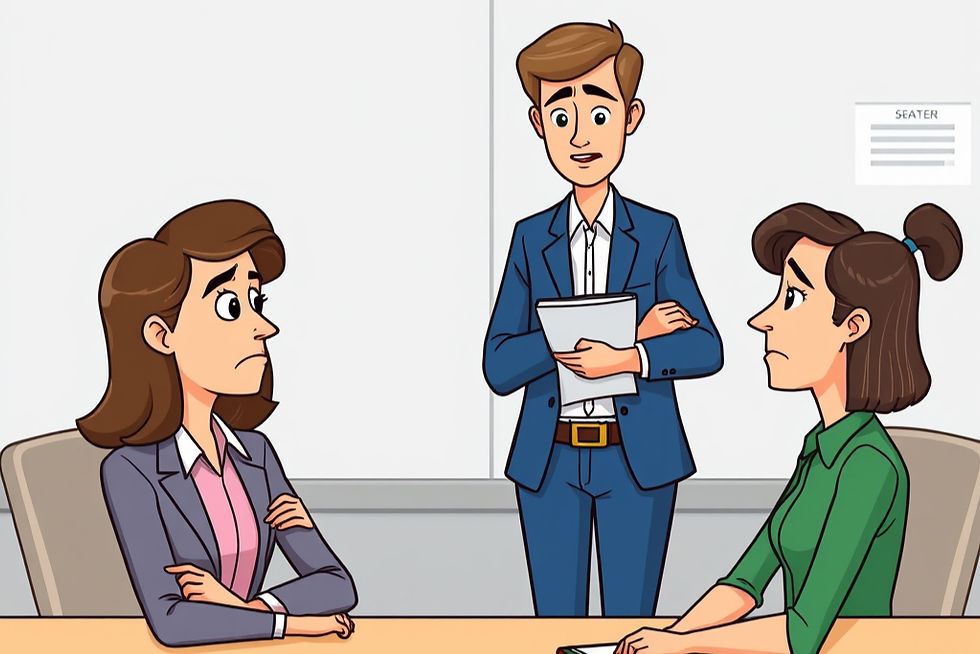
Your manager has started checking your work more closely. They send short emails, question your decisions, and rarely give positive feedback. You start avoiding them because every conversation feels uncomfortable. Your manager then sees this as disengagement, which makes them even more frustrated.
Nobody has raised a formal complaint, but the relationship is deteriorating.
This is a classic early-resolution situation.
Step 1: Identify the real issue
Before deciding what to do, try to identify what is actually going wrong.
Is the problem about:
tone of communication;
lack of feedback;
too much feedback;
unclear expectations;
workload;
trust;
performance concerns;
personality differences;
or a previous conversation that caused damage?
Being specific helps. “My manager is impossible” may be how it feels, but “I do not understand what standard they expect from me” gives you something to work with.
Step 2: Prepare for a calm conversation
If it feels safe and appropriate, consider asking for a private conversation.
You might say:
“I would like to talk about how we are working together. I feel some of our recent communication has become difficult, and I would like to understand how we can improve it.”
This avoids blame while still making the issue clear.
Before the conversation, think about:
what you want to raise;
what examples you can give;
what you want to ask for;
what you are willing to do differently;
and what support you need.
The aim is not to win an argument. The aim is to understand whether the relationship can be reset.
Step 3: Use practical language
In the meeting, try using specific, future-focused language.
For example:
“When feedback is given at short notice, I find it difficult to understand priorities. Could we agree a clearer way to review work?”
Or:
“I sometimes feel unsure whether you are raising a performance concern or giving informal feedback. It would help me to understand the difference.”
Or:
“I want to work well with you, but I think we need clearer expectations.”
This type of language is useful because it moves the conversation from personal criticism to practical improvement.
Step 4: Ask for HR or another manager to support the conversation
If the relationship is too tense for a one-to-one conversation, you may need support.
You could ask HR:
“I would like to resolve the communication issues with my manager before they escalate. Could HR support a conversation or advise whether mediation might be suitable?”
This is different from immediately raising a grievance. It gives the organisation a chance to support early resolution.
Step 5: Consider mediation
Mediation may be particularly helpful in manager-employee conflict.
It can help where:
trust has broken down;
conversations keep going wrong;
both people feel misunderstood;
feedback has become difficult;
the employee feels unsupported;
the manager feels avoided or challenged;
or both sides need a practical agreement about future working.
A mediator does not decide whether the manager or employee is right. Instead, they help both people talk through what is happening and agree what needs to change.
This might include communication expectations, feedback arrangements, workload discussions, meeting frequency, boundaries, or how concerns will be raised in future.
Step 6: Know when the issue may need to be escalated
Not every manager-employee conflict is suitable for mediation.
You may need to escalate if:
you believe you are being bullied;
there is discrimination, harassment or victimisation;
your manager is acting unfairly or unlawfully;
you are being subjected to unreasonable treatment;
your health is being affected;
you have tried to resolve the issue and nothing has changed;
or your employment may be at risk.
In those situations, you may need HR advice, union support, Acas guidance, legal advice or a formal grievance.
Final thought to help when you and your manager are not communicating well
A strained relationship with your manager does not always need to become a formal grievance. Many issues can be improved through clearer communication, early support, conflict coaching or mediation.
However, if the issue is serious, repeated, discriminatory or affecting your wellbeing, you should not feel pressured to keep it informal.
The right route depends on what is happening, how serious it is, and whether both people are willing to repair the working relationship.
The Mediation Agency supports employees, managers and HR teams with workplace mediation, conflict coaching and early resolution services. If communication has broken down at work, a confidential initial conversation can help you understand whether mediation may be suitable.


Comments