
What Should I Do If I Feel Bullied at Work?


Feeling bullied at work can be deeply upsetting. It can affect your confidence, your performance, your wellbeing and how safe you feel in your role.
Sometimes bullying is obvious. It may involve shouting, humiliation, threats, exclusion, unreasonable criticism or deliberately undermining someone. In other cases, it is more subtle. You may feel ignored, isolated, blamed, spoken over, given impossible deadlines, or treated differently from others.
The difficult part is knowing what to do next.
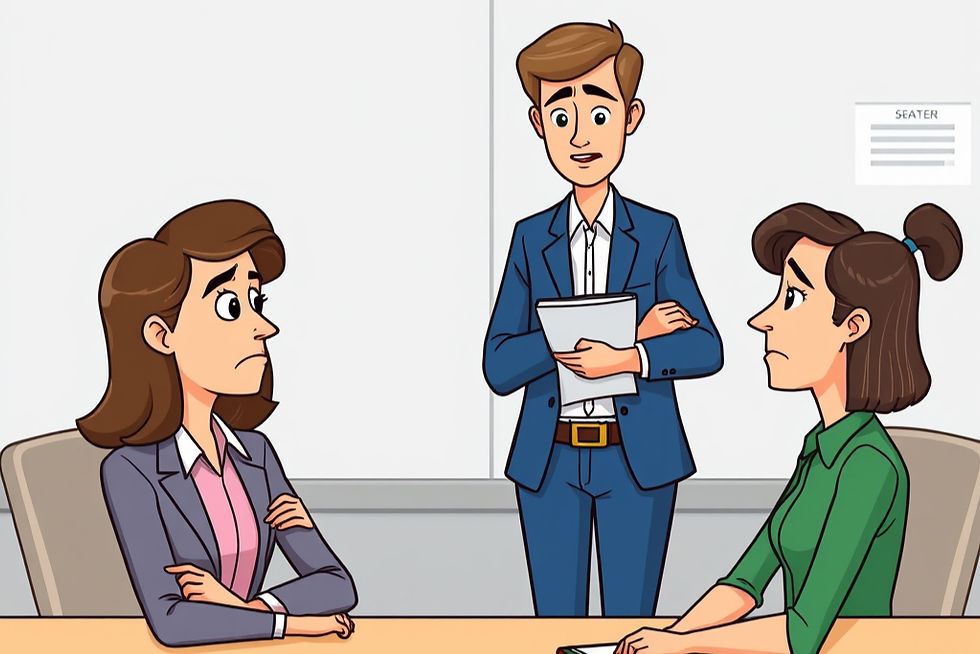
Feeling bullied at work? It's a common situation
Imagine this situation.
You have been in your role for two years. Recently, a colleague has started making comments about your work in front of others. They copy people into critical emails, leave you out of discussions, and make jokes that feel personal. When you challenge it, they say you are “too sensitive”.
You are not sure whether to raise a grievance, speak to your manager, ask HR for help, or try to resolve it directly.
This is exactly the kind of situation where it helps to pause and choose the right route carefully.
Step 1: Write down what is happening
Before taking action, start keeping a clear record.
Include:
what happened;
when it happened;
who was involved;
who witnessed it;
what was said or done;
how it affected you;
and whether there is evidence, such as emails, messages or meeting notes.
Try to keep this factual. For example, instead of writing “they are always horrible to me”, write “on Tuesday, they said my work was embarrassing during the team meeting”.
This does not mean your feelings are unimportant. It simply helps others understand the pattern and seriousness of the issue.
Step 2: Think about whether it is safe to raise informally
In some cases, it may be appropriate to speak to the person directly.
You might say:
“I wanted to raise something with you. When comments are made about my work in front of the team, I find it undermining. I would like feedback to be given privately.”
This may work where the person has not realised the impact of their behaviour, or where there has been a misunderstanding.
However, informal conversation is not always suitable. If the behaviour is serious, repeated, aggressive, discriminatory, linked to harassment, or you feel unsafe raising it directly, you should not feel pressured to handle it alone.
Step 3: Speak to your manager or HR
If the behaviour continues, or you do not feel able to speak to the person directly, you may need to involve someone else.
This might be your manager, HR, another senior person, or a trade union representative.
You can keep the first message simple:
“I am concerned about behaviour I am experiencing at work. I would like to discuss whether this can be addressed informally or whether I should raise it formally.”
This allows the organisation to guide you towards the right process.
Step 4: Know when mediation may help
Mediation may help where the issue is about communication, behaviour, misunderstanding, relationship breakdown or tension that both people are willing to address.
For example, mediation may help if:
both people need to continue working together;
the issue has not reached the point of serious misconduct;
both sides are willing to talk;
there is a possibility of agreeing future boundaries;
or the main problem is how people communicate.
Mediation can help people discuss what has happened, how it has affected them, and what needs to change.
However, mediation should not be used to minimise bullying or pressure someone into tolerating unacceptable behaviour.
Step 5: Know when to escalate
You may need to escalate the matter if:
the behaviour is serious or repeated;
you feel intimidated or unsafe;
the issue involves discrimination or harassment;
your health is being affected;
informal steps have not worked;
management has ignored the issue;
or you need the employer to investigate formally.
In those situations, you may need to raise a formal grievance, speak to Acas, contact a union representative, or seek legal advice.
Final thought
If you feel bullied at work, do not ignore it and do not assume you have to manage it alone.
Start by recording what is happening. Consider whether informal resolution is safe and realistic. If not, speak to HR, a manager or another appropriate person.
Mediation may help where the issue is about a strained working relationship and both people are willing to take part. But where the behaviour is serious, discriminatory, unsafe or requires investigation, a formal process may be more appropriate.
The Mediation Agency supports employees, HR teams and organisations with workplace mediation, conflict coaching and early resolution services. If you are unsure whether mediation is suitable, a confidential initial conversation can help you consider the next step.


Comments